- Population
- 52,220
- 52.2K
- Elevation
- 11 m
- above sea level
- Local time
- UTC+01:00
- Europe/Zagreb · UTC+01:00
- Airports
- PUY Pula Airport6 km
- RJK Rijeka Airport69 km
About Pula
Pula is a city. Location: City of Pula, Istria County. Population: 52,220. Elevation: 11 m.
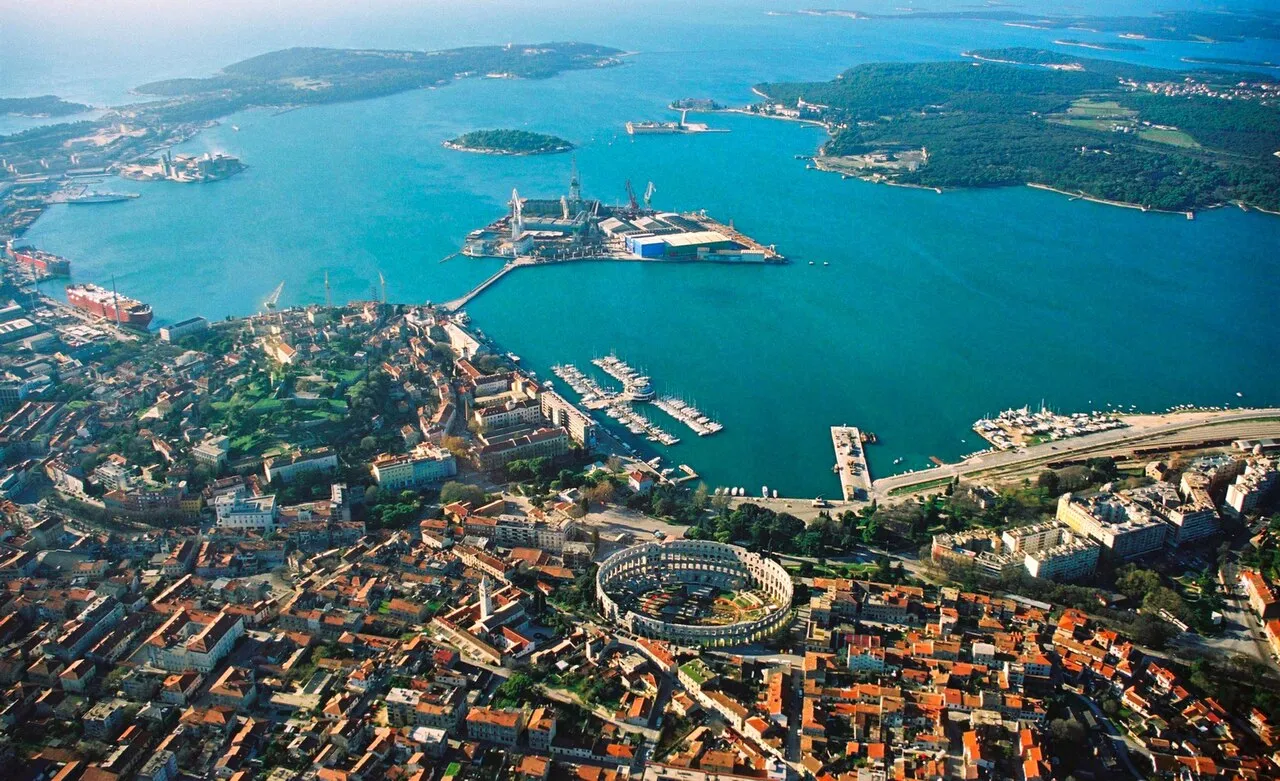
Pula, also known as Pola, its Italian name, is the largest city in Istria County, western Croatia, and the seventh-largest city in the country, situated at the southern tip of the Istrian peninsula in western Croatia, with a population of 52,220 in 2021. It is known for its multitude of ancient Roman buildings, the most famous of which is the Pula Arena, one of the best preserved Roman amphitheaters. The city has a long tradition of wine making, fishing, shipbuilding, and tourism.
Source: Wikipedia · CC BY-SA 4.0
Photos of Pula
-

Olgierd Rudak · CC BY-SA 4.0 -

Christian Baltrusch from Hamburg, Deutschland · CC BY-SA 4.0 -

Jose A · CC BY 2.0 -

Jernej Furman from Slovenia · CC BY 2.0 -

Gromane · CC0


Travel notes for Pula
From Wikivoyage
Pula (Italian: Pola, Slovene: Pulj) is a nice town at the tip of the Istrian peninsula in northwestern Croatia.
Understand+
Pula was founded by Illyrians about 3000 years ago. Romans occupied Istria in 177 BC. After the destruction of the Western Roman Empire, the Istrian peninsula was devastated by Ostrogoths. Slavs came in Istria during migration period in 7th century but mostly lived in the countryside. At that time Pula was still inhabited mostly by Italians. Landlords in Pula changed quite frequently in the Middle Ages, from the Republic of Venice to Genoa to Illyrian Provinces and Austria–Hungary. After the Second World War, it became part of Yugoslavia. At that time, many Italians fled to Italy and Pula was settled by Croats. Although most of the population is Croatian, there are several large minority groups in Pula such as Serbs, Italians, Bosniaks and Slovenes.
Most tourists visit in the summer months, with most attractions and restaurants closing between October and May.
Climate:
The climate of Pula is warm to hot during the summer months, and cool to cold during winter. Average temperatures during July, the hottest month range from 18° to 29°, while in January, the coldest month, temperatures range from an average low of 1° to 10° Spring and autumn are generally mild in comparison
Get in+
By plane:
1 Pula Airport (PUY IATA). Pula has its own international airport with scheduled and charter flights. Some of them are seasonal (summer only). (updated Feb 2025)
There is a scheduled bus service from the bus station in town to the airport. Buses are operated by Brioni and connect to most major flights. The cost of a one-way ticket is €3.50. A taxi from the bus station to the city should be around €11.50 in the low season and much higher in the summer.
It is possible to also consider Rijeka Airport on the island of Krk and Trieste Airport in nearby Italy to access Pula as they are close by and offer flights to different destinations.
Shuttle buses from the Pula bus station to Pula airport leave at 5-10 times a day. The cost is €6.
By land:
The large and modern bus station is on the edge of the 'old town' district and is the hub of local, domestic and international bus routes. There are direct buses from Zagreb, Rijeka, Split, Trieste, Ljubljana, Belgrade and Venice. Online timetables are listed at Brioni and Pula Info.
Hitchhiking from Zagreb works very well. In Zagreb start from the petrol station after the "Billa" supermarket on the southside of the Sava river. In Rijeka ask people to drop you off at the little SOS stop after a pretty sharp right bend of the motor way around Rijeka.
By sea:
Hydrofoil services operate from the wharf both around the Croatian coastline, and across to Venice. These are pricey, though provide a quick journey and provide some great views.
Venezia Lines ferry connects Pula with Venice. It runs five times a week, travel time is around 3 hr.
By rail:
Source: Wikivoyage · CC BY-SA 4.0 · abridged
Twin towns and sister cities of Pula
- Graz· Austria
Source: Wikidata. Only places with a page on this site are shown.
Population of Pula over time
| 2011 | 57,460 | |
|---|---|---|
| 2012 | 57,053 | |
| 2021 | 52,220 |
Censuses and official estimates; source: Wikidata.
Climate of Pula
Best months for sightseeingBest months for sightseeing: May–June, September.
This month · November
A wet month
Day 14° · Night 7° · Rain 103 mm
- Hottest month
- July (day 29°)
- Coldest month
- January (night 2°)
- Wettest month
- November (103 mm)
- Driest month
- July (42 mm)
Bars: average monthly low and high temperature. Below: precipitation. Monthly averages for 1970–2000 at about 18 km resolution, adjusted for elevation. Highlighted months are mild and relatively dry. Source: WorldClim 2.1 (CC BY 4.0).
Show values as a table
| Month | Jan | Feb | Mar | Apr | May | Jun | Jul | Aug | Sep | Oct | Nov | Dec |
|---|---|---|---|---|---|---|---|---|---|---|---|---|
| Average high (°C) | 9° | 10° | 13° | 17° | 22° | 26° | 29° | 29° | 24° | 20° | 14° | 11° |
| Average low (°C) | 2° | 3° | 5° | 8° | 13° | 16° | 19° | 19° | 15° | 11° | 7° | 4° |
| Precipitation (mm) | 68 | 55 | 58 | 64 | 56 | 63 | 42 | 67 | 76 | 95 | 103 | 77 |
How to get to Pula
The nearest airport is Pula Airport (PUY), 6 km to the northeast as the crow flies. The nearest large city is Rijeka, 69 km to the northeast.
Airports
- Pula Airport (PUY) Pula 6 kmnortheast
- Rijeka Airport (RJK) Rijeka(Omišalj) 69 kmnortheast
- Trieste Airport (TRS) Ronchi dei Legionari/Trieste 111 kmnorth
Nearby large cities
- Rijeka Population: 108K 69 kmnortheast
- Ljubljana Population: 272.2K 141 kmnorth
- Zagreb Population: 663.6K 197 kmnortheast
- Klagenfurt Population: 100.3K 198 kmnorth
- Split Population: 149.8K 256 kmsoutheast
Straight-line distances; road distances are longer. Airport data: OurAirports.
Day trips from Pula
Within 100 km: 9 historic and cultural sites, 51 natural sites, 39 lakes, rivers and coasts.
0–25 km5 places
- Veliki Brijun Island 8 kmNW
- Mali Brijun Island 11 kmNW
- Brijuni Island 10 kmNW
- Istria Natural site 19 kmNE
25–60 km12 places
- Lošinj Island 54 kmSE
- Otočić Srakane Vele Island 49 kmSE
- Cres Island 46 kmE
- Euphrasius-Basilika Attraction 45 kmNW
60–100 km82 places
- Krk Island 65 kmE
- Uvala Stipanja Natural site 72 kmNE
- Silba Island 86 kmSE
- Otok Ilovik Island 72 kmSE
Straight-line distances.
Pula and similar cities
Side by side with cities of similar size in the same country: population, elevation and climate.
| Measure | Pula | Slavonski Brod | Karlovac | Zadar |
|---|---|---|---|---|
| Population | 52.2K | 45K | 41.9K | 67.3K |
| Elevation | 11 m | 83 m | 114 m | 2 m |
| Summer day (hottest month) | 29° | 28° | 27° | 30° |
| Winter night (coldest month) | 2° | -4° | -3° | 2° |
| Annual rainfall | 824 mm | 775 mm | 1,082 mm | 864 mm |
| Best months | May–Jun, Sep | May–Jun, Sep | May–Sep | May–Jun, Sep–Oct |
| Distance | — | 330 km | 151 km | 138 km |
Climate values are 1970–2000 monthly averages; straight-line distance.
Nearby attractions & nature
Everything nearby-
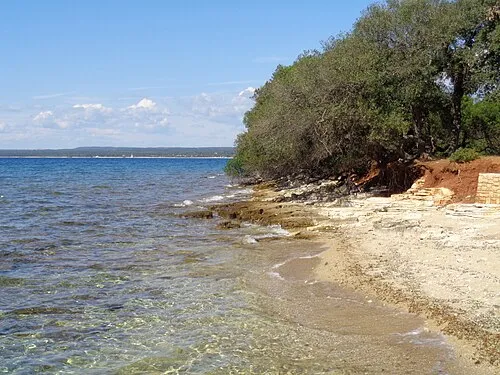 Veliki Brijun Island, City of Pula8.3 km NW
-
 Mali Brijun Island, City of Pula11 km NW
-
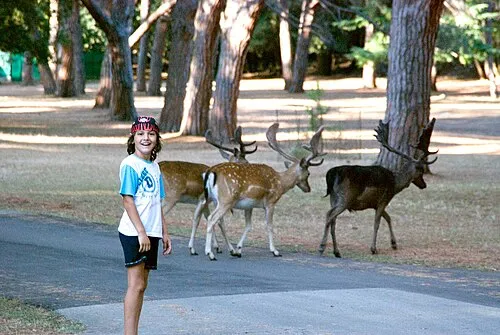 Brijuni Island, Istria County9.8 km NW
-
Istria Natural site, Croatia19 km NE
-
Raša River, Istria County24 km NE
Sources & licences
Data last updated: · 2 independent sources