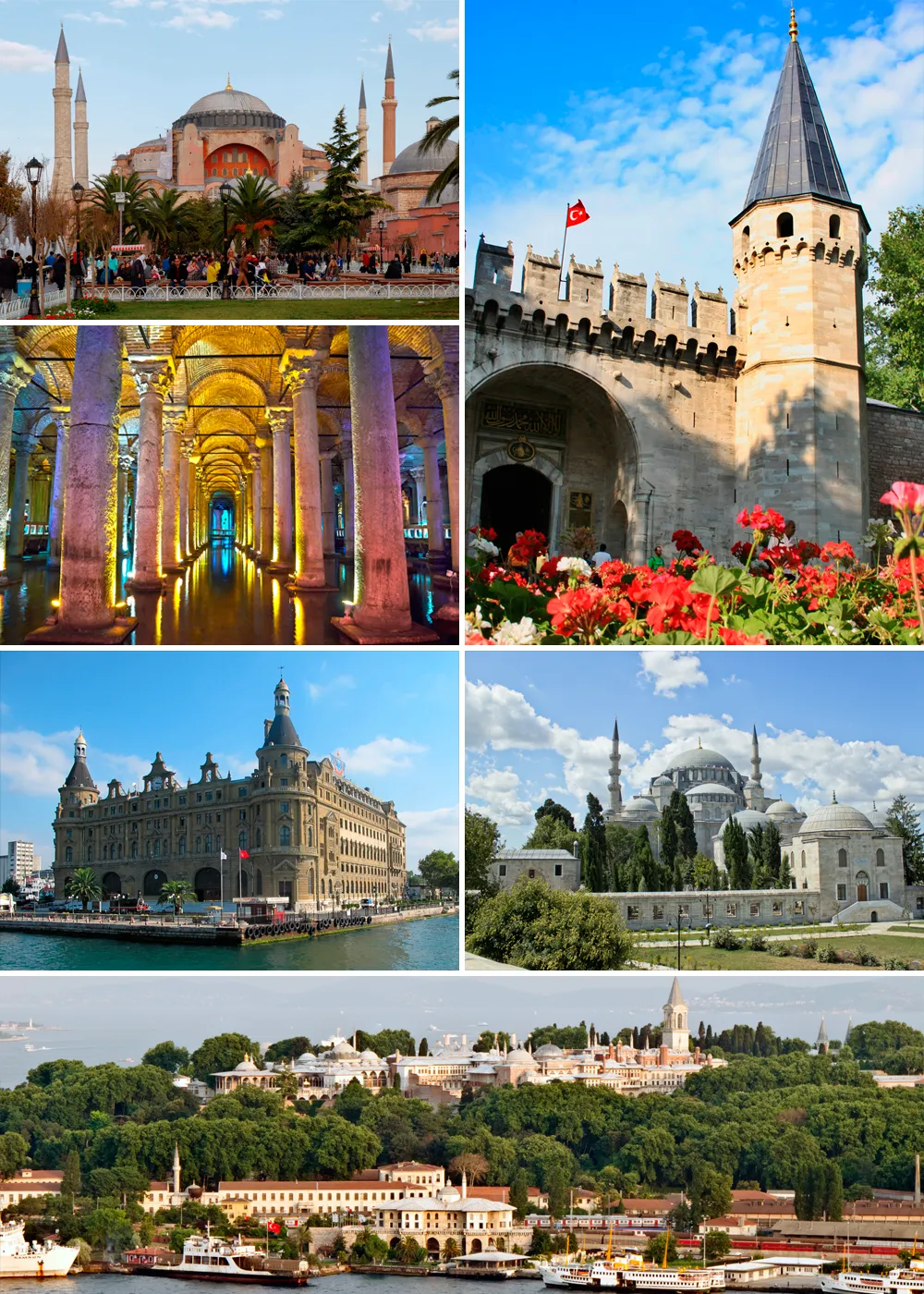
- Population
- 15,701,602
- 15.7M
- Elevation
- 39 m
- above sea level
- Local time
- UTC+03:00
- Europe/Istanbul · UTC+03:00
- Airports
- SAW Istanbul Sabiha Gökçen International Airport33 km
- IST İstanbul Airport34 km
About Istanbul
Istanbul is a city. Location: Istanbul, Turkey. Population: 15,701,602. Elevation: 39 m.
Istanbul is the largest city in Turkey, a megacity, constituting the country's economic, cultural, and historical center. With a population of over 15 million, it is home to 18% of the population of Turkey. Istanbul is among the largest cities in Europe and in the world by population. It is a city on two continents; about two-thirds of its population live in Europe and the rest in Asia.
Source: Wikipedia · CC BY-SA 4.0
Photos of Istanbul
-

Mike Peel · CC BY-SA 4.0 -
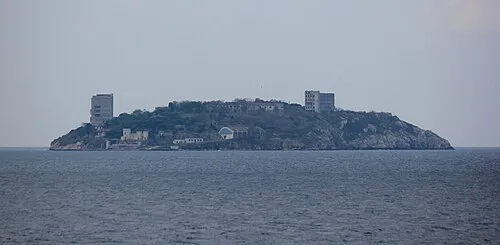
Plati Island Julian Nyča · CC BY-SA 4.0 -
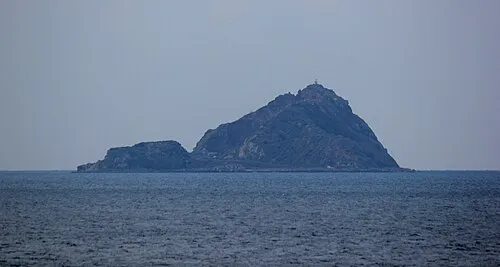
Oxia Island Julian Nyča · CC BY-SA 4.0 -
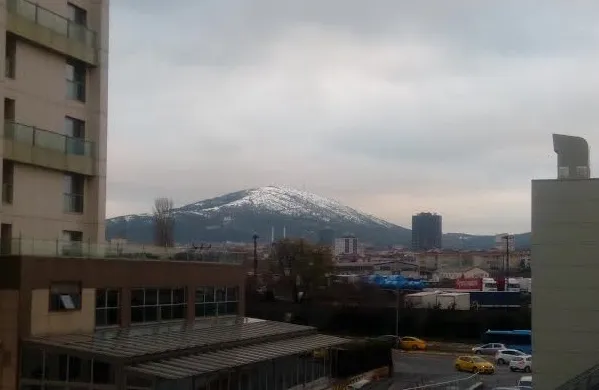
Kayış Dağı Mirada · CC BY-SA 2.5 -
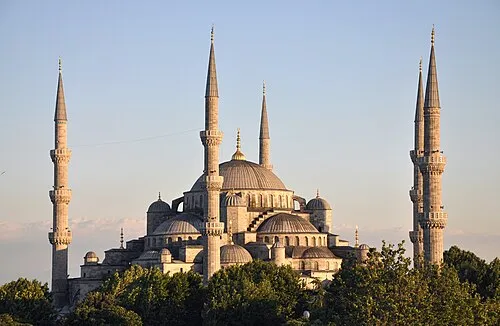
Blue Mosque Moonik · CC BY-SA 3.0


Travel notes for Istanbul
From Wikivoyage
Istanbul (Turkish: İstanbul) is a very large city of fantastic history, culture and beauty. Called Byzantium in ancient times, the city's name was changed to Constantinople in 324 CE when it was rebuilt by the first Christian Roman Emperor, Constantine. The name "Istanbul", perhaps surprisingly, comes from Greek and could be translated as a corruption of "to the city". While the term had been in widespread use for centuries, it only became the official name of the city upon the foundation of the Republic of Turkey in the 1920s.
The most populous city in Europe, Istanbul forms the financial and cultural center of Turkey and confidently straddles the borders between Asia and Europe as it has for millennia: this is the result when you mix ancient Christendom, a medieval metropolis and the modern Middle East. Situated on either side of the Bosphorus, Istanbul retains its metropolitan status: the city's population is more than 14 million people, making it one of the largest cities in the world.
Lauded in antiquity as "the second Rome", this is a city where you most certainly should roam — culture and excitement lie around every corner and more than 2,000 years of history await you.
Understand+
History:
While relics of prehistoric human settlement were found in the Yarımburgaz Cave near the Küçükçekmece Lake and during the construction of a subway station in Yenikapı, Greek colonists from Megara, directed by their legendary leader Byzas, have been traditionally accepted as the founders of Istanbul. Expanding the ancient Greek colony of Byzantium by the order of the Roman Emperor Constantine the Great, the imperial city of Constantinople was for nearly a thousand years the heavily-fortified capital of the Eastern Roman (later termed Byzantine) Empire. To this day, the Ecumenical Patriarch, head of the Eastern Orthodox Church continues to be the Archbishop of Constantinople, who is still based in Istanbul. It was finally conquered by the Ottoman Sultan Mehmed II on 29 May 1453, an event sometimes used to mark the end of the Middle Ages. It was the nerve centre for military campaigns that were to enlarge the Ottoman Empire dramatically. By the mid-1500s, Istanbul, with a population of almost half a million, was a major cultural, political, and commercial centre. Ottoman rule continued until it was defeated in the first World War and Istanbul was occupied by the allies. When the Republic of Turkey was born in 1923 after the War of Independence, Kemal Atatürk moved its capital to the city of Ankara, strategically located in the centre of the new republic. However, Istanbul has continued to expand dramatically; today its population is approximately 14 million and increases at an estimated 400,000 immigrants per year. Industry has expanded even as tourism has grown. It continues to be a city that creates its own history at the intersection where both continents meet.
Orientation:
Get in+
See Turkey#Get in for visa requirements. From 2020, most EU, UK, CIS and South American visitors do not need a visa. Those from many other countries including Australia, Canada and US can get an e-visa online, valid for 90 days.
By plane:
1 Istanbul Airport (IST IATA). Istanbul's chief airport, and the main port of entry into Turkey, is 30 km northwest of the city in Arnavutköy, on the Europe-side Black Sea coast. It was opened in 2018 / 19 and replaced Atatürk Airport. It has a very wide range of international flights, by Turkish Airlines and other carriers, and domestic flights at least daily to all the major Turkish cities. There's car hire and the usual passenger facilities. Metro line M11, public buses, and taxis are available to the city centre. A second metro line is under construction from the airport to the western district of Halkalı. (updated Feb 2023)
Getting to and from Istanbul International Airport
By metro – The M11 metro line connects the airport to the city, providing a fast and affordable option. The metro station is outside airport exit 11, in front of the parking lot, where you can purchase an 'Istanbulkart.' To reach your destination, you will likely need to transfer and possibly walk a short distance. The Istanbul metro operates from 06:15 to 00:15.
Source: Wikivoyage · CC BY-SA 4.0 · abridged
Twin towns and sister cities of Istanbul
- Shimonoseki· Japan
- Cairo· Egypt
- Houston· United States
- Berlin· Germany
- Rabat· Morocco
- Barcelona· Spain
- Dubai· United Arab Emirates
- Cologne· Germany
Source: Wikidata. Only places with a page on this site are shown.
Population of Istanbul over time
| 2010 | 13,255,685 | |
|---|---|---|
| 2011 | 13,624,240 | |
| 2012 | 13,854,740 | |
| 2013 | 14,160,467 | |
| 2014 | 14,377,018 | |
| 2015 | 14,657,434 | |
| 2016 | 14,804,116 | |
| 2017 | 15,029,231 | |
| 2018 | 15,067,724 | |
| 2019 | 15,519,267 | |
| 2020 | 15,462,452 | |
| 2023 | 15,655,924 |
Censuses and official estimates; source: Wikidata.
Climate of Istanbul
Best months for sightseeingBest months for sightseeing: May–June, September–October.
This month · November
Outside the best season
Day 15° · Night 8° · Rain 89 mm
Better nearby cities in November
- Aydin · 365 km south19°
- Hottest month
- July (day 29°)
- Coldest month
- February (night 3°)
- Wettest month
- December (113 mm)
- Driest month
- July (25 mm)
Bars: average monthly low and high temperature. Below: precipitation. Monthly averages for 1970–2000 at about 18 km resolution, adjusted for elevation. Highlighted months are mild and relatively dry. Source: WorldClim 2.1 (CC BY 4.0).
Show values as a table
| Month | Jan | Feb | Mar | Apr | May | Jun | Jul | Aug | Sep | Oct | Nov | Dec |
|---|---|---|---|---|---|---|---|---|---|---|---|---|
| Average high (°C) | 9° | 9° | 12° | 17° | 22° | 26° | 29° | 28° | 25° | 20° | 15° | 11° |
| Average low (°C) | 3° | 3° | 4° | 8° | 12° | 17° | 19° | 19° | 16° | 12° | 8° | 5° |
| Precipitation (mm) | 95 | 64 | 64 | 47 | 38 | 31 | 25 | 35 | 42 | 75 | 89 | 113 |
Other places to visit in this season: May June September October
How to get to Istanbul
The nearest airport is Istanbul Sabiha Gökçen International Airport (SAW), 33 km to the southeast as the crow flies. The nearest large city is Fatih, 1 km to the northwest.
Airports
- Istanbul Sabiha Gökçen International Airport (SAW) Pendik, Istanbul 33 kmsoutheast
- İstanbul Airport (IST) Istanbul 34 kmnorthwest
- Tekirdağ Çorlu Airport (TEQ) Çorlu 88 kmwest
Nearby large cities
- Fatih Population: 356K 1 kmnorthwest
- Zeytinburnu Population: 280.9K 4 kmsouthwest
- Üsküdar Population: 524.5K 5 kmeast
- Şişli Population: 314.7K 6 kmnortheast
- Esenler Population: 520.2K 7 kmnorthwest
Straight-line distances; road distances are longer. Airport data: OurAirports.
Day trips from Istanbul
Within 100 km: 158 historic and cultural sites, 160 natural sites, 233 lakes, rivers and coasts.
0–25 km171 places
- Andirovitha Island Island 24 kmSE
- Pita Island Island 18 kmSE
- Princes Islands Island 16 kmSE
- Proti Island Island 14 kmSE
25–60 km152 places
- Karaburun Plajı Beach 41 kmNW
- Karaburun Sahili Plaj Beach 44 kmNW
- Yeniköy Plajı Beach 40 kmNW
- Kara Burun Plaji Beach 42 kmNW
60–100 km228 places
- Yeniköy Plaj Beach 84 kmSW
- Sedef Adası Island 94 kmSW
- Mutlu Adası Island 98 kmS
- Mola Adaları Island 95 kmSW
Straight-line distances.
Nearby attractions & nature
Everything nearby-
Laleli mosque Attraction, Fatih0.7 km SE
-
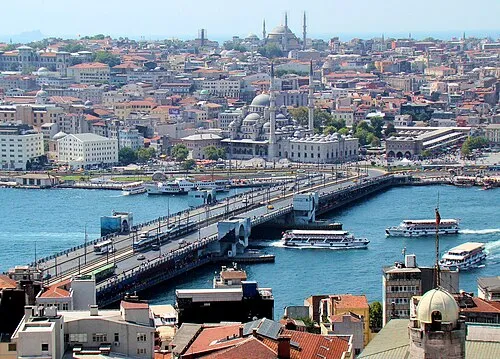 Galata Bridge Landmark, Istanbul2.1 km E
-
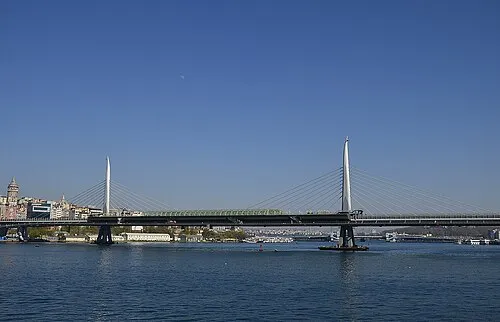 Golden Horn Metro Bridge Landmark, Beyoğlu1.7 km NE
-
Basilica s. Petri in Ormisda (Former Byzantine Church) Attraction, Fatih0.5 km NE
-
Aqueduct of Valens Historic site, Fatih0.5 km NE
-
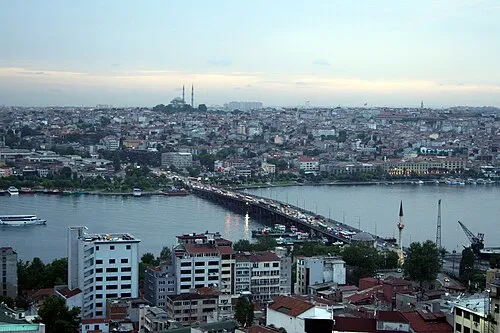 Atatürk Bridge Landmark, Turkey1.7 km NE
-
Palais Placidia (Constantinople) Historic site, Fatih0.6 km NE
-
Fatih mosque Attraction, Fatih0.7 km N
Sources & licences
Data last updated: · 2 independent sources