- Population
- 46,970
- 47K
- Elevation
- 39 m
- above sea level
- Local time
- UTC+00:00
- Europe/London · UTC+00:00
- Airports
- PIK Glasgow Prestwick Airport13 km
- GLA Glasgow Airport29 km
About Kilmarnock
Kilmarnock is a city. Location: East Ayrshire, Scotland. Population: 46,970. Elevation: 39 m.
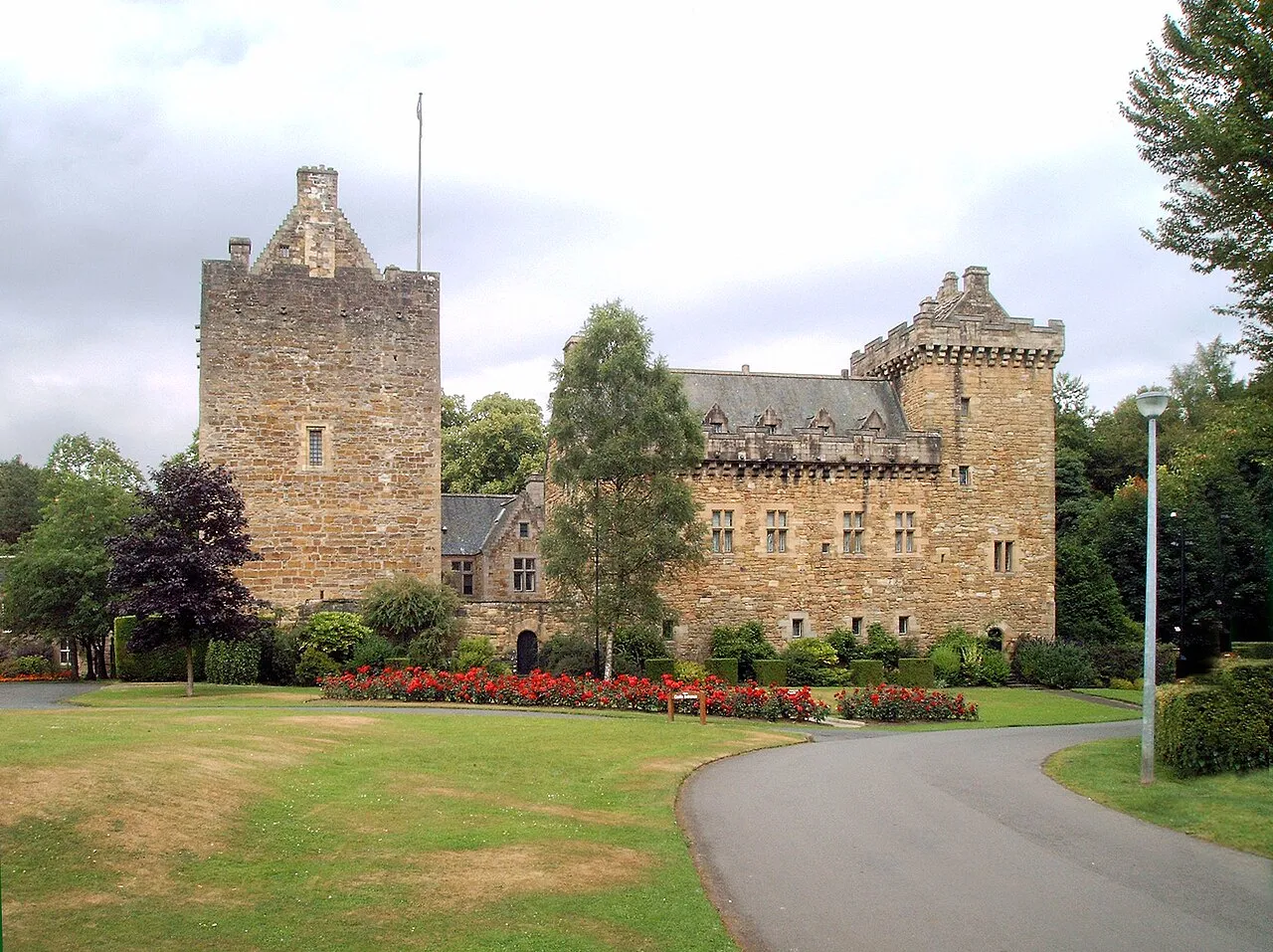
Kilmarnock ( kil-MAR-nək; Scots: Kilmaurnock; Scottish Gaelic: Cill Mheàrnaig, IPA: [kʲʰiːʎ ˈvaːɾnəkʲ]), meaning "the church of Mernóc", also colloquially referred to as Killie, is a town and former burgh in East Ayrshire situated in southwest Scotland. The town has served as the administrative centre of East Ayrshire Council since 1996, and is the region's main commercial and industrial centre.
Source: Wikipedia · CC BY-SA 4.0
Photos of Kilmarnock
-

Rosser1954 · CC BY-SA 4.0 -

Rosser1954 · CC BY-SA 4.0 -

yellow book · CC BY 2.0 -

Billy McCrorie · CC BY-SA 2.0 -

Billy McCrorie · CC BY-SA 2.0


Travel notes for Kilmarnock
From Wikivoyage
Kilmarnock is a town in Ayrshire in southwest Scotland, with a population of 46,970 in 2020. It's industrial, though many of its historic industries have gone, such as BMK Carpets, Massey Ferguson Tractors and the Johnnie Walker whisky blending plant. It's the seat of local government for East Ayrshire, a commuter town for Glasgow, and stands astride several transport corridors. So you might break a journey at one of its edge-of-town hotels, but you're only likely to visit the centre for business or family connections.
Kilmarnock is Cill Mheàrnaig the church of St Marnock, who came from Ireland, studied in Iona then was a missionary in southwest Scotland. He died at Annadale in 625 AD and the church claimed to keep his head, for veneration and miraculous cures. It's not known where the holy head might have gone, and whether it was to the same place as the carpets, tractors and blended whisky.
Understand+
Kilmarnock grew up in the 19th and early 20th centuries from a small market town into a busy industrial centre, then went into decline. One illustrative example is its best-known product, Johnnie Walker whisky.
John Walker (1805-1857) was a general grocer, and a teetotaller. Brewing and distilling were traditional farm trades in Ayrshire as elsewhere, but small scale, erratic in quality and heavily taxed, which fostered illicit stills and smuggling. The Excise Act of 1823 greatly reduced tax and facilitated legal distilling, and Scotch whisky blossomed into a profitable large scale industry. Walker's business therefore focussed on whisky. He was never a distiller himself, but blended whiskies to order for his customers, at a time when blending at source was not permitted.
The Spirits Act of 1860 legalised blending, and John's descendants ramped this up, to make Walker's Kilmarnock Whisky into a nationally-recognised brand. Blends were sweeter and more palatable and found a mass market across Britain and its global commercial empire. The Walker family introduced the square bottle (more efficient and less breakable in transit), the angled label (more visible and distinctive) and a range of products. They bought up distilleries, beginning with Cardhu in 1893, to secure the output for their blends, which require a precise, constant and commercially secret mixture. The signature "Striding Man", that dapper Regency buck, appeared in 1909.
Johnnie Walker Red Label in the 20th century dominated the budget end of the whisky market. It was the dram of the Scottish working man, followed by a half pint of ale to rinse the last drops from the glass. It was the sustenance of funeral teas and the consolation for home defeats at the fitba'. It was your Christmas present to Uncle Henry, though if he was wealthy and you had expectations, you'd upgrade him to Black Label.
Get in+
By train:
Trains from Glasgow Central run every 30 min, taking 50 min, with the last train shortly after 23:00. They continue every couple of hours to New Cumnock, Sanquhar, Dumfries, Annan, Gretna and Carlisle. (Don't use this route from England, take the fast train from London to Glasgow then change.)
The 1 railway station is central in town. There is a staffed ticket office and machines, toilets and a waiting room. There is level access to Platforms 1, 2 and 3, and a lift to Platform 4.
By bus:
Stagecoach Bus X76 runs hourly from Glasgow Buchanan station, taking 40 min. The last bus is at 9:30PM.
The slow Bus 4 runs every 30 min from Glasgow Buchanan, taking 70 min and continuing to Prestwick Airport and town, and Ayr, another 40 min. The fast bus X16 on this route is suspended in 2022.
Bus 10 runs hourly from Troon, taking an hour via Muirhead and Dundonald.
Bus 11 runs every 12 min from Ardrossan (for Arran ferry), taking 75 min via Saltcoats, Stevenston, Kilwinning and Irvine.
The 2 bus station is central, 200 yards east of the railway station.
By road:
From Glasgow follow M77 southwest, 23 miles. This continues beyond Kilmarnock as A77 to Prestwick, Ayr, Girvan, Cairnryan (for Ulster ferries) and Stranraer.
From the south follow M74 then turn onto A71 west, the old Edinburgh - Ayr road.
Source: Wikivoyage · CC BY-SA 4.0 · abridged
Twin towns and sister cities of Kilmarnock
- Herstal· Belgium
Source: Wikidata. Only places with a page on this site are shown.
Climate of Kilmarnock
Best months for sightseeingBest months for sightseeing: June–August.
This month · November
A wet month
Day 9° · Night 4° · Rain 135 mm
- Hottest month
- July (day 18°)
- Coldest month
- January (night 1°)
- Wettest month
- October (139 mm)
- Driest month
- April (63 mm)
Bars: average monthly low and high temperature. Below: precipitation. Monthly averages for 1970–2000 at about 18 km resolution, adjusted for elevation. Highlighted months are mild and relatively dry. Source: WorldClim 2.1 (CC BY 4.0).
Show values as a table
| Month | Jan | Feb | Mar | Apr | May | Jun | Jul | Aug | Sep | Oct | Nov | Dec |
|---|---|---|---|---|---|---|---|---|---|---|---|---|
| Average high (°C) | 7° | 7° | 8° | 11° | 14° | 17° | 18° | 18° | 15° | 13° | 9° | 7° |
| Average low (°C) | 1° | 1° | 2° | 4° | 6° | 9° | 11° | 11° | 9° | 7° | 4° | 2° |
| Precipitation (mm) | 132 | 94 | 104 | 63 | 66 | 66 | 75 | 92 | 122 | 139 | 135 | 130 |
How to get to Kilmarnock
The nearest airport is Glasgow Prestwick Airport (PIK), 13 km to the southwest as the crow flies. The nearest large city is Glasgow, 32 km to the northeast.
Airports
- Glasgow Prestwick Airport (PIK) Prestwick, South Ayrshire 13 kmsouthwest
- Glasgow Airport (GLA) Glasgow 29 kmnorth
- Campbeltown Airport (CAL) Campbeltown 78 kmwest
Nearby large cities
- Glasgow Population: 626.4K 32 kmnortheast
- Edinburgh Population: 515K 90 kmnortheast
- Dundee Population: 148.2K 135 kmnortheast
- Belfast Population: 348K 145 kmsouthwest
- Newcastle upon Tyne Population: 300.1K 196 kmeast
Straight-line distances; road distances are longer. Airport data: OurAirports.
Day trips from Kilmarnock
Within 100 km: 166 historic and cultural sites, 3,407 natural sites, 1,064 lakes, rivers and coasts.
0–25 km121 places
- Ayr Beach Beach 19 kmSW
- Troon Beach Beach 13 kmSW
- Horse Isle Island 22 kmW
- Nether Tarrioch Holm Island 23 kmSE
25–60 km1,198 places
- Isle of Arran Island 48 kmW
- Great Cumbrae Island Island 32 kmNW
- Hunterston Sands Beach 28 kmNW
- Pladda Island 44 kmSW
60–100 km3,318 places
- Powillimount Beach Beach 99 kmSE
- Burntisland Beach Beach 94 kmNE
- Cramond beach Beach 86 kmNE
- Portobello Beach Beach 95 kmNE
Straight-line distances.
Nearby attractions & nature
Everything nearby-
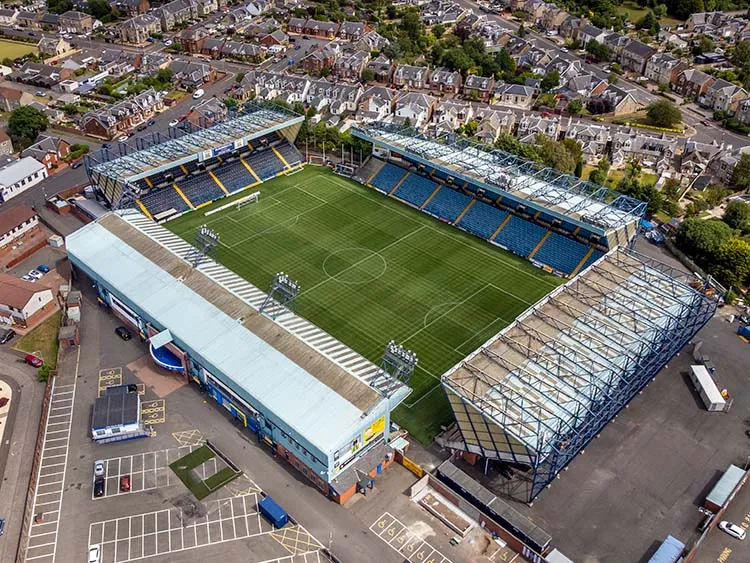 Rugby Park Landmark, East Ayrshire1.1 km SW
-
Craufurdland Water River, Scotland1 km NE
-
Craigie Hill Mountain, South Ayrshire5.7 km S
-
Cessnock Water River, Scotland5.2 km E
-
Symington Mediumwave Transmitter Landmark, South Ayrshire7 km SW
-
Dundonald Castle Mountain, South Ayrshire7.5 km SW
-
Sornhill Mountain, East Ayrshire8.9 km SE
-
Carmel Water River, Scotland6.7 km W
Other cities and towns in East Ayrshire
Sources & licences
Data last updated: · 2 independent sources