- Population
- 8,961,989
- 9M
- Elevation
- 25 m
- above sea level
- Local time
- UTC+00:00
- Europe/London · UTC+00:00
- Airports
- LCY London City Airport13 km
- LHR London Heathrow Airport24 km
About London
London is a city. Location: Greater London, England. Population: 8,961,989. Elevation: 25 m.
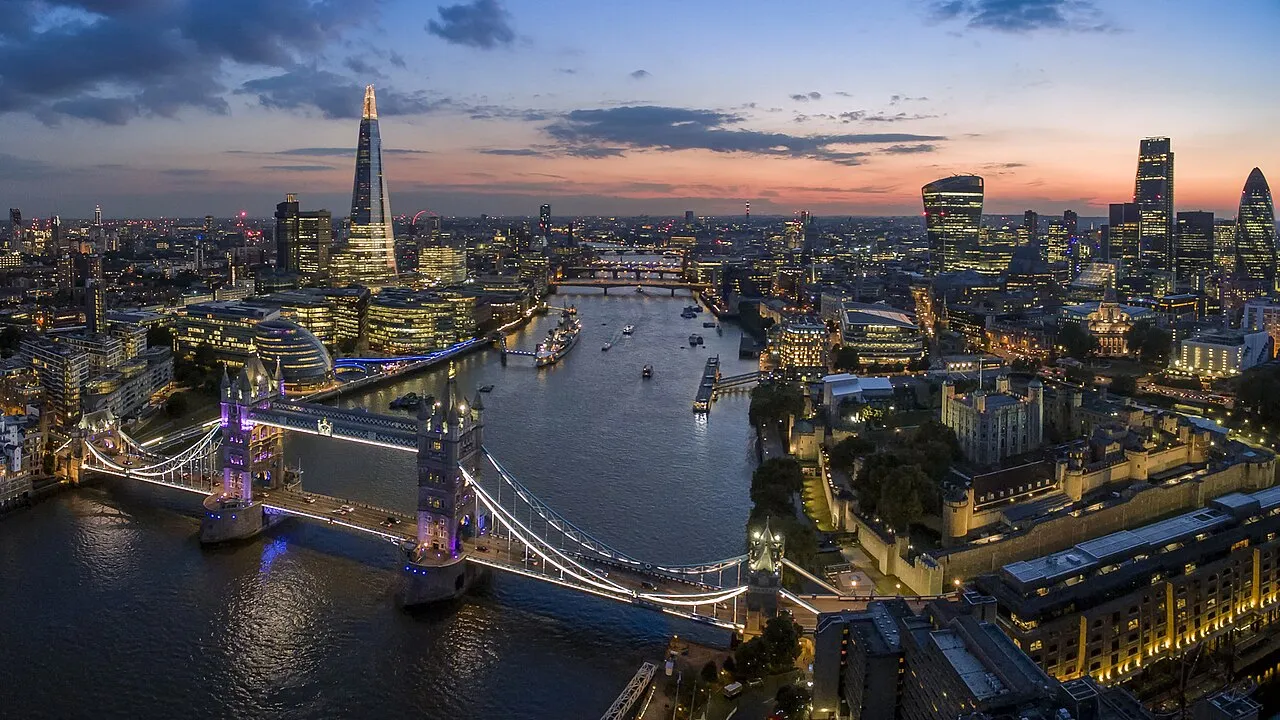
London is the capital and largest city of England and the United Kingdom, with a population of 9.14 million people in 2025. Its wider metropolitan area is the largest in Western Europe, with a population of 15.4 million. London stands on the River Thames in southeast England, at the head of a 50-mile (80 km) tidal estuary down to the North Sea, and has been a major settlement for nearly 2,000 years.
Source: Wikipedia · CC BY-SA 4.0
Photos of London
-

AccuCities · CC BY-SA 4.0 -

Oleg Yunakov · CC BY-SA 4.0 -

Oleg Yunakov · CC BY-SA 4.0 -
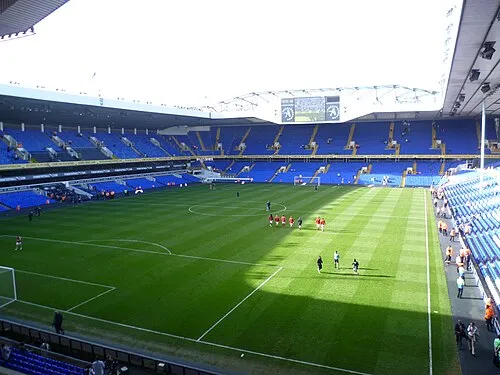
White Hart Lane Forthevline · CC BY-SA 3.0 -
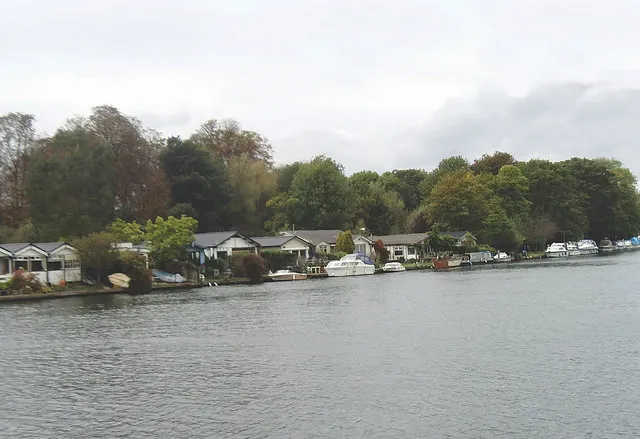
Trowlock Island David Kemp · CC BY-SA 2.0


Travel notes for London
From Wikivoyage
Vibrant and truly multicultural, London is a megalopolis of people, ideas and frenetic energy. The capital and largest city of the United Kingdom sits on the River Thames in South-East England. Greater London has a population of a little over 9 million. Considered one of the world's leading "global cities", London remains an international capital of culture, music, education, fashion, politics, finance and trade.
For the visitor, there is a seemingly endless choice of historical sites, shopping, museums, food, art galleries, nightlife, and activities. Once a Celtic settlement, London is a bustling city, where visitors come to experience the urban heritage and see its specific royal-themed attractions.
Understand+
History:
There have been settlements on the site of London since well before Roman times, with evidence of Bronze Age and Celtic inhabitants. The Roman city of Londinium, established just after the Roman conquest of Britannia in the year 43, formed the basis for the modern city (some isolated Roman period remains are still to be seen within the City). After the end of Roman rule in 410 and a short-lived decline, London experienced a gradual revival under the Anglo-Saxons, as well as the Norsemen, and emerged as a great medieval trading city, eventually replacing Winchester as the royal capital of England. This paramount status for London was confirmed when William the Conqueror, a Norman, built the Tower of London after the conquest in 1066 and was crowned King of England in Westminster.
London went from strength to strength with the rise of England to first European then global prominence, and the city became a great centre of culture, government and industry. London's long association with the theatre, for example, can be traced back to the English Renaissance (witness the Rose Theatre and great playwrights like Shakespeare who made London their home). With the rise of Britain to supreme maritime power in the 18th and 19th centuries (see Industrial Britain) and the possessor of the largest global empire, London became an imperial capital and drew people and influences from around the world to become, for many years, the largest city in the world.
England's royal family has, over the centuries, added much to the London scene for today's traveller: the Albert Memorial, Buckingham Palace, Kensington Palace, Royal Albert Hall, Tower of London, Kew Palace and Westminster Abbey being prominent examples.
Get in+
By plane:
London receives more flights than any other city in the world. It is served by six airports (LON IATA for all airports).
There are direct public transport connections between all London airports and the city centre. The quickest travel option is usually by train, tube or coach. See the linked articles for information on travelling from each airport. When planning your trip, leave plenty of time to get to your destination from the airport.
If you arrive into a London airport and must catch a connecting flight from another airport, leave plenty of time to travel through London. This can be quite time consuming and you may need to catch two or more trains.
1 London Heathrow Airport (LHR IATA). Heathrow is the main airport for London, and the second busiest in the world in terms of international passenger traffic. (updated Jan 2024)
2 London Gatwick Airport (LGW IATA). London's second-busiest airport Gatwick has two terminals - "North Terminal" and "South Terminal". You can fly into Gatwick from a large number of domestic and international destinations, particularly destinations in Europe. Airlines include British Airways, easyJet, KLM, Ryanair and TUI. (updated Jan 2024)
3 London Stansted Airport (STN IATA). Stansted is busy with short-haul flights from destinations in Europe, the Middle East and North Africa, as well as UK destinations including Newquay, Edinburgh and Belfast. Airlines include easyJet, Jet2 and Ryanair. (updated Jan 2024)
4 London Luton Airport (LTN IATA). Luton Airport is around 30 miles from London. You can fly into Luton from a large number of European destinations, particularly smaller cities in southern and eastern Europe. Airlines include easyJet, Ryanair and Wizz Air. For public transport to central Londoni, it's a choice between a train (shuttle metro train to Luton Airport Parkway then train to London St Pancras), or a bus from the airport to London Victoria. (updated Jan 2024)
Source: Wikivoyage · CC BY-SA 4.0 · abridged
Twin towns and sister cities of London
- Berlin· Germany
- New York· United States
- Sofia· Bulgaria
- Tokyo· Japan
- Zagreb· Croatia
- Baku City· Azerbaijan
Source: Wikidata. Only places with a page on this site are shown.
Population of London over time
| 1931 | 8,098,942 | |
|---|---|---|
| 1941 | 7,987,936 | |
| 1951 | 8,164,416 | |
| 1961 | 7,781,342 | |
| 1971 | 7,449,184 | |
| 1981 | 6,608,513 | |
| 1991 | 6,887,280 | |
| 2001 | 7,172,036 | |
| 2013 | 8,416,535 | |
| 2016 | 8,787,892 | |
| 2018 | 8,908,081 | |
| 2021 | 8,799,728 |
Censuses and official estimates; source: Wikidata.
Climate of London
Best months for sightseeingBest months for sightseeing: June–August.
This month · November
A cold month
Day 11° · Night 4° · Rain 61 mm
- Hottest month
- July (day 23°)
- Coldest month
- February (night 2°)
- Wettest month
- January (62 mm)
- Driest month
- February (40 mm)
Bars: average monthly low and high temperature. Below: precipitation. Monthly averages for 1970–2000 at about 18 km resolution, adjusted for elevation. Highlighted months are mild and relatively dry. Source: WorldClim 2.1 (CC BY 4.0).
Show values as a table
| Month | Jan | Feb | Mar | Apr | May | Jun | Jul | Aug | Sep | Oct | Nov | Dec |
|---|---|---|---|---|---|---|---|---|---|---|---|---|
| Average high (°C) | 8° | 8° | 11° | 13° | 17° | 21° | 23° | 23° | 19° | 15° | 11° | 8° |
| Average low (°C) | 2° | 2° | 3° | 4° | 7° | 10° | 13° | 13° | 10° | 7° | 4° | 3° |
| Precipitation (mm) | 62 | 40 | 47 | 45 | 48 | 53 | 42 | 49 | 57 | 61 | 61 | 59 |
How to get to London
The nearest airport is London City Airport (LCY), 13 km to the east as the crow flies. For international flights: London Heathrow Airport (LHR) (24 km). The nearest large city is City of Westminster, 1 km to the southwest.
Airports
- London City Airport (LCY) London 13 kmeast
- London Heathrow Airport (LHR) London 24 kmwest
- London Gatwick Airport (LGW) London 40 kmsouth
Nearby large cities
- City of Westminster Population: 247.6K 1 kmsouthwest
- Islington Population: 319.1K 3 kmnortheast
- Archway Population: 215.7K 7 kmnorth
- Tottenham Population: 130K 11 kmnorth
- Walthamstow Population: 109.4K 12 kmnortheast
Straight-line distances; road distances are longer. Airport data: OurAirports.
Day trips from London
Within 100 km: 826 historic and cultural sites, 585 natural sites, 322 lakes, rivers and coasts.
0–25 km436 places
- White Hart Lane Landmark 11 kmN
- Sunbury Court Island 22 kmSW
- Rivermead Island 22 kmSW
- Lot's Ait Island 12 kmW
25–60 km569 places
- Spotlites @ Kings Theatre Attraction 48 kmE
- Yantlet beach Beach 56 kmE
- The Lynch Island 53 kmW
- Isle of Grain Island 58 kmE
60–100 km728 places
- Isle of Sheppey Island 68 kmE
- St Nicholas Church Shoreham Attraction 75 kmS
- The Marlipins Museum Museum 76 kmS
- Camber Sands Beach 91 kmSE
Straight-line distances.
Nearby attractions & nature
Everything nearby-
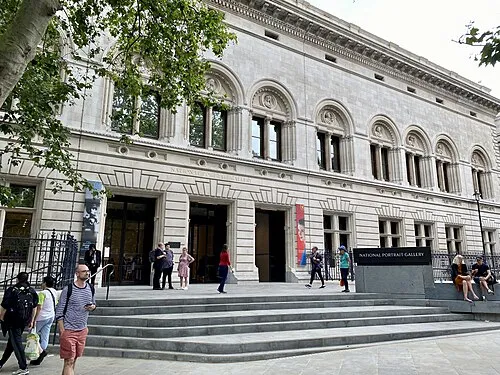 National Portrait Gallery Museum, City of Westminster0.2 km NW
-
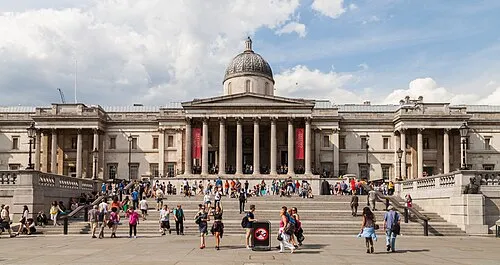 National Gallery Museum, City of Westminster0.2 km W
-
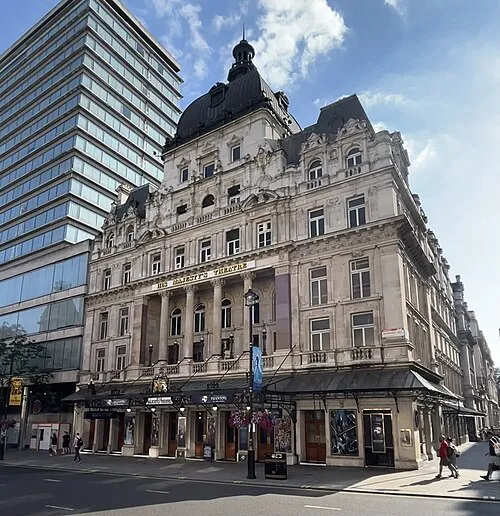 Her Majesty's Theatre Attraction, City of Westminster0.4 km W
-
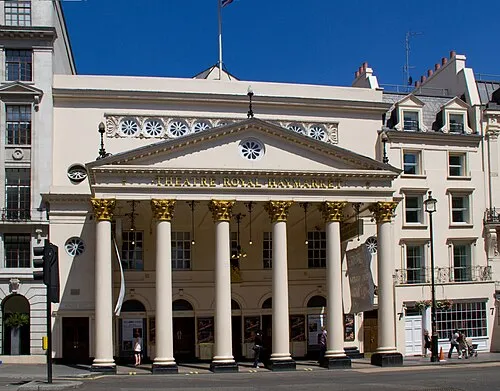 Theatre Royal Haymarket Attraction, City of Westminster0.4 km W
-
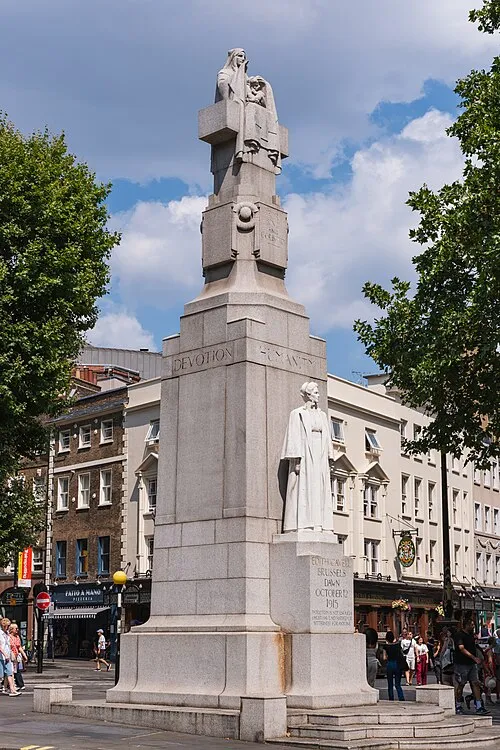 Edith Cavell Memorial Landmark, City of Westminster0.1 km NW
-
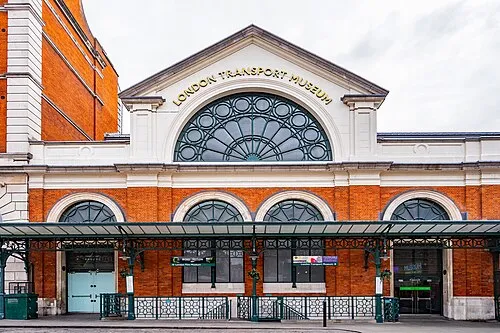 London Transport Museum Museum, City of Westminster0.5 km NE
-
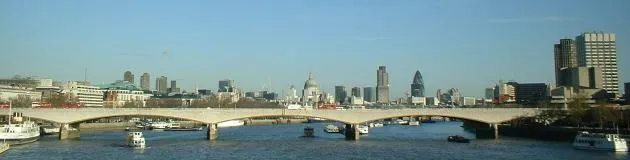 Waterloo Bridge Landmark, Lambeth0.6 km E
-
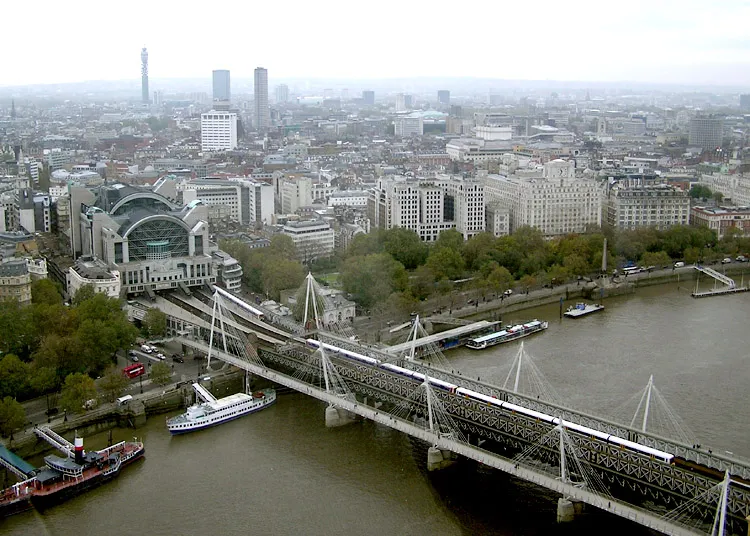 Hungerford Bridge and Golden Jubilee Bridges Landmark, Lambeth0.5 km SE
Other cities and towns in Greater London
-
City of Westminster Municipality, Greater London2.4 km W
-
Hackney Municipality, Greater London4 km NE
-
Camden Municipality, Greater London4.5 km NW
-
Islington Municipality, Greater London4.4 km N
-
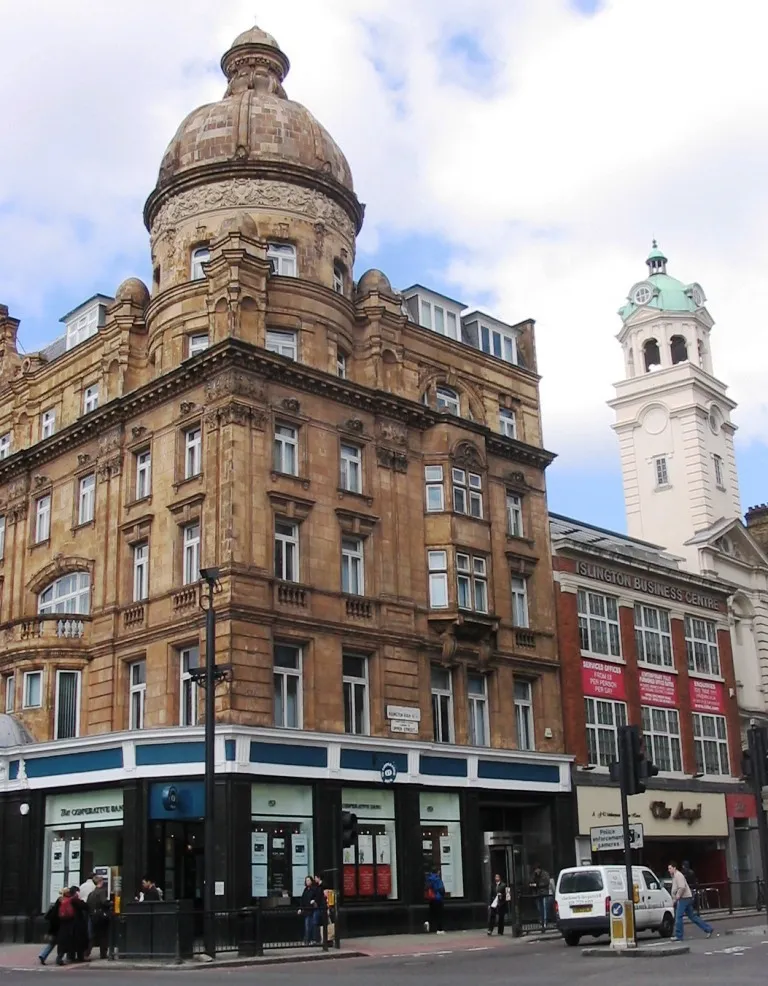 Islington City, Islington3.5 km NE
-
Royal Kensington and Chelsea Municipality, Greater London4.7 km W
Sources & licences
Data last updated: · 2 independent sources