Salzburg Stadt
Local name: Salzburg
Located in State of Salzburg, Austria Coordinates: 47°48′02″ N 13°02′43″ E

- Population
- 157,245
- 157.2K
- Elevation
- 422 m
- above sea level
- Local time
- UTC+01:00
- Europe/Vienna · UTC+01:00
- Places inside
- 1
- listed under Salzburg Stadt
- Airports
- SZG Salzburg Airport3 km
- LNZ Linz-Hörsching Airport98 km
About Salzburg Stadt
Salzburg Stadt is a district. Location: State of Salzburg, Austria. Population: 157,245.
Salzburg is the fourth-largest city in Austria. In 2026 its population was 157,994. The city lies on the Salzach River, near the border with Germany and at the foot of the Alps mountains. The town occupies the site of the Roman settlement of Iuvavum. Founded as an episcopal see in 696, it became a seat of the archbishop in 798. Its main sources of income were salt extraction, trade and gold mining. The fortress of Hohensalzburg, one of the largest medieval fortresses in Europe, dates from the 11th century.
Source: Wikipedia · CC BY-SA 4.0
Photos of Salzburg Stadt
-
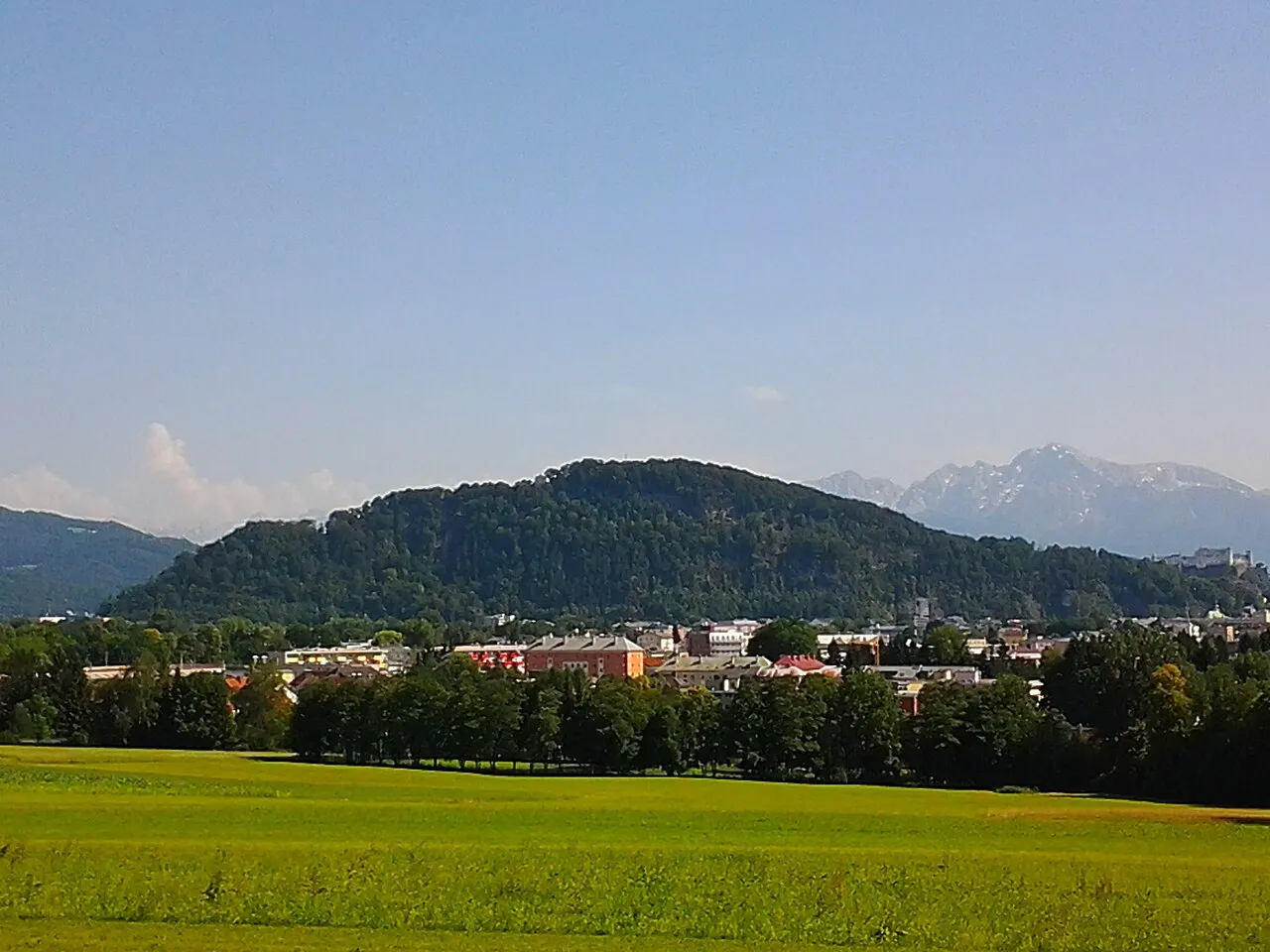
Kapuzinerberg Eweht · CC BY-SA 3.0 -
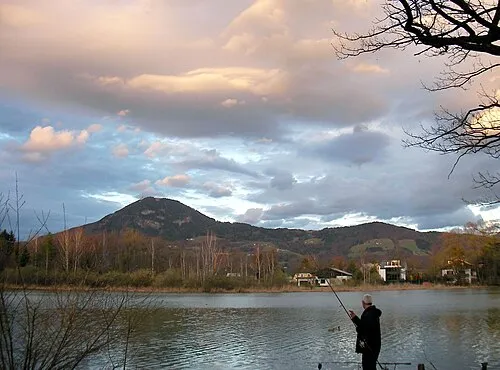
Gaisberg Optimale · CC BY-SA 3.0 -
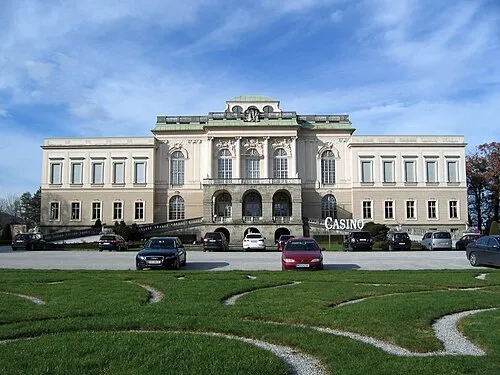
Schloss Klessheim Andreas Weigel. Popmuseum at German Wikipedia · CC BY-SA 3.0 -
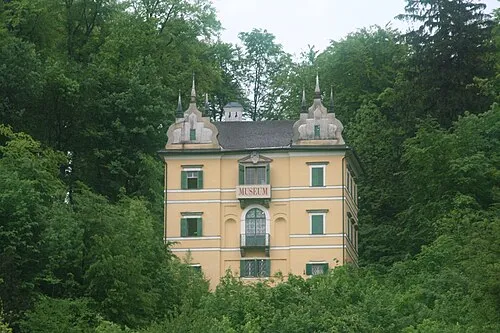
Monatsschlößl Ich · CC BY-SA 3.0 -
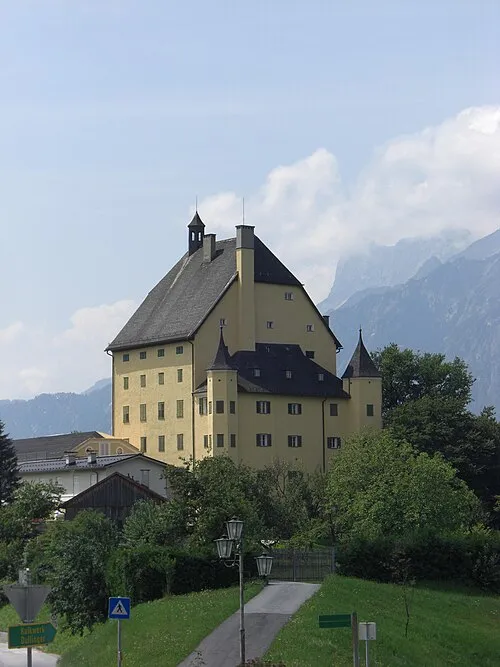
Schloss Goldenstein Viva La Ren · CC BY-SA 3.0 at


Travel notes for Salzburg Stadt
From Wikivoyage
Salzburg is a city in Austria, near the border with Germany's Bavaria state, with a population of 157,000 (2020). It was the setting for the 1965 movie The Sound of Music, so you may think you know all there is to see in Salzburg if you have seen the movie. Admittedly, it is difficult not to burst into song when you're walking along the Salzach River, or climbing up to the Hohensalzburg fortress, which looms over the city. But there is a lot more to this compact, courtly city than Julie Andrews and Wolfgang Amadeus Mozart, who was born here.
Understand+
Salzburg, which has been inhabited since the Neolithic period, is the fourth-largest city in Austria (after Vienna, Graz and Linz) and the capital of the federal state of Salzburg. In 45 AD, it was a Roman establishment. The Bavarians took over in the 6th century. At the end of the 16th century, under Archbishop Wolf Dietrich von Raitenau, the transformation of the medieval town into the "Rome of the North" began, with new buildings following the Italian baroque style. The buildings from this era are mostly in the "Old Town", as it is known today. The old town is one of the best-preserved city centres in the German-speaking world and was listed as a UNESCO World Heritage Site in 1997. Salzburg became part of the Austrian Empire in 1816. It frequently ranks favourably in quality of life rankings.
Origins of name:
The name Salzburg, literally "Salt Castle", is derived from the barges carrying salt on the Salzach river, which were subject to a toll in the 8th century.
Early history and medieval period:
Traces of human settlements dating to the Neolithic Age and later a Celt camp have been found in the area. Starting from 15 BC, the small communities were grouped into a single town which was named by the Romans as Juvavum. Little remains of the city from this period.
The Hohensalzburg Fortress was built in 1077 and expanded in the following centuries. Independence from Bavaria was secured in the late 14th century.
Independent state:
Get in+
By plane:
1 Salzburg W.A. Mozart International Airport (SZG IATA), Innsbrucker Bundesstraße 95 (about 20 minutes from the centre of the city), ☏ +43 662 8580 7911. Connection with the city is provided by a trolley bus. The airport has direct connections from Rotterdam, Amsterdam Schiphol, Bristol, Brussels, Birmingham, Coventry, Exeter, London, Palma de Mallorca, Paris, Saint Petersburg, Istanbul, Moscow, Vienna, all big German cities, and Zurich. (updated Sep 2021)
Having arrived at the airport (Flughafen Salzburg), it is very easy to make your way into the town centre by electric trolleybus or other modes of transport. Tickets for these services can be bought easily from the bus driver and you can travel from here to the "Hauptbahnhof" main station where you can reach many destinations, predominantly in Austria, but also across the whole of Europe.
For more international connections, you may prefer flying to Munich and taking the train to Salzburg. Other airports in Austria like Graz or Innsbruck can be of interest if you like scenic journeys through the mountains.
By train:
Salzburg's train station, the Hauptbahnhof, is north of the Salzach River within the New Town of Salzburg. The train ride from Munich to Salzburg takes about 1½ hours (Regional trains take about 2 hours), and international trains operate from Zurich, Zagreb, Ljubljana and Budapest and other destinations. Inter-city trains operate very frequently (especially to Vienna where services are almost hourly).
The ÖBB Nightjet runs to Salzburg from Belgium, Germany, Italy and Switzerland.
Source: Wikivoyage · CC BY-SA 4.0 · abridged
Twin towns and sister cities of Salzburg Stadt
- Vilnius· Lithuania
Source: Wikidata. Only places with a page on this site are shown.
Population of Salzburg Stadt over time
| 2014 | 146,631 | |
|---|---|---|
| 2016 | 150,887 | |
| 2017 | 154,076 | |
| 2018 | 153,377 | |
| 2020 | 155,021 |
Censuses and official estimates; source: Wikidata.
Climate of Salzburg Stadt
Best months for sightseeingBest months for sightseeing: May–September.
This month · November
A cold month
Day 8° · Night 1° · Rain 91 mm
- Hottest month
- July (day 24°)
- Coldest month
- January (night -4°)
- Wettest month
- July (174 mm)
- Driest month
- February (69 mm)
Bars: average monthly low and high temperature. Below: precipitation. Monthly averages for 1970–2000 at about 18 km resolution, adjusted for elevation. Highlighted months are mild and relatively dry. Source: WorldClim 2.1 (CC BY 4.0).
Show values as a table
| Month | Jan | Feb | Mar | Apr | May | Jun | Jul | Aug | Sep | Oct | Nov | Dec |
|---|---|---|---|---|---|---|---|---|---|---|---|---|
| Average high (°C) | 4° | 6° | 10° | 14° | 19° | 22° | 24° | 24° | 20° | 15° | 8° | 4° |
| Average low (°C) | -4° | -3° | 1° | 4° | 8° | 11° | 13° | 13° | 10° | 5° | 1° | -2° |
| Precipitation (mm) | 76 | 69 | 88 | 90 | 116 | 164 | 174 | 161 | 109 | 80 | 91 | 89 |
Other places to visit in this season: May June July August September
How to get to Salzburg Stadt
The nearest airport is Salzburg Airport (SZG), 3 km to the west as the crow flies. The nearest large city is Salzburg, 1 km to the southwest.
Airports
- Salzburg Airport (SZG) Salzburg 3 kmwest
- Linz-Hörsching Airport (LNZ) Linz 98 kmnortheast
- Munich Airport (MUC) Munich 112 kmnorthwest
Nearby large cities
- Salzburg Population: 157.2K 1 kmsouthwest
- Linz Population: 204.8K 108 kmnortheast
- Munich Population: 1.5M 116 kmwest
- Innsbruck Population: 132.5K 138 kmsouthwest
- Regensburg Population: 151.4K 152 kmnorthwest
Straight-line distances; road distances are longer. Airport data: OurAirports.
Day trips from Salzburg Stadt
Within 100 km: 275 historic and cultural sites, 3,429 natural sites, 1,128 lakes, rivers and coasts.
0–25 km347 places
- Zellersee Lake 22 kmNE
- Obertrumer See Lake 19 kmN
- Niedertrumer See Lake 21 kmN
- Hintersee Lake 16 kmE
25–60 km1,359 places
- Hoher Dachstein Mountain 56 kmSE
- Frauenchiemsee Island 47 kmW
- Herreninsel Island 49 kmW
- Augstsee Lake 57 kmE
60–100 km3,126 places
- Fürlegsee Lake 81 kmSW
- Vorderer Langtalsee Lake 91 kmS
- Seeriessee Lake 73 kmSE
- Untersee Lake 65 kmSE
Straight-line distances.
Places in Salzburg Stadt
1 placeBar: population relative to the most populous place in this list.
Nature and heritage in Salzburg Stadt
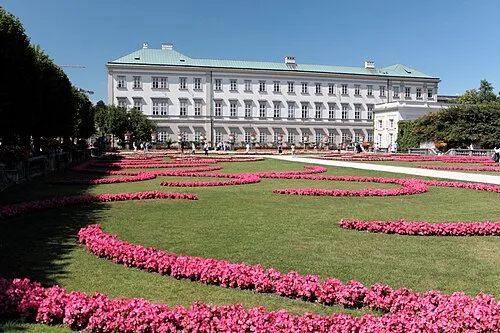
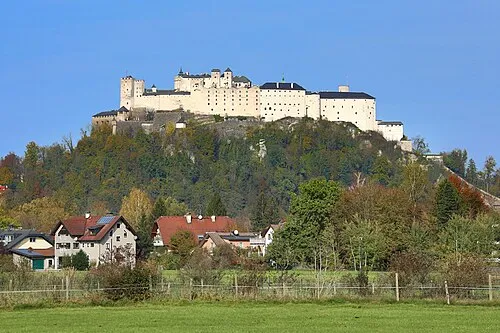
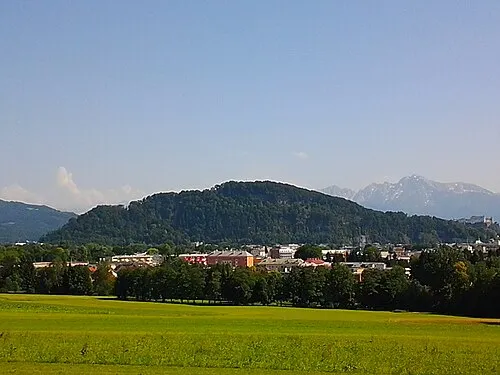
Nearby attractions & nature
Everything nearby-
Hellbrunner Bach River, State of Salzburg1.4 km SE
-
Glanbach River, State of Salzburg2.7 km N
-
Alter Bach River, State of Salzburg3 km N
-
Schloss Klessheim Historic site, Wals-Siezenheim4.5 km NW
-
Söllheimer Bach River, State of Salzburg3.1 km NE
-
Schleiferbach River, State of Salzburg3.3 km NE
Sources & licences
Data last updated: · 2 independent sources