Slovenia
Local name: Slovenija
Coordinates: 46°05′00″ N 15°00′00″ E
- Population
- 2,130,986
- 2.1M
- Continent
- Europe
- Local time
- UTC+01:00
- Europe/Ljubljana · UTC+01:00
About Slovenia
Slovenia is a country in Europe. Its population is 2,130,986.
Slovenia, officially the Republic of Slovenia, is a country in Central Europe. It borders Italy to its west, Austria to its north, Hungary to its northeast, and Croatia to its south and southeast; its southwestern boundary consists of a 46.6-kilometre (29.0 mi) coastline on the Adriatic Sea. The country is mostly mountainous and forested, covering 20,271 square kilometres (7,827 sq mi). Its population is approximately 2.1 million people. Slovene is the official language.
Source: Wikipedia · CC BY-SA 4.0
Photos of Slovenia
-
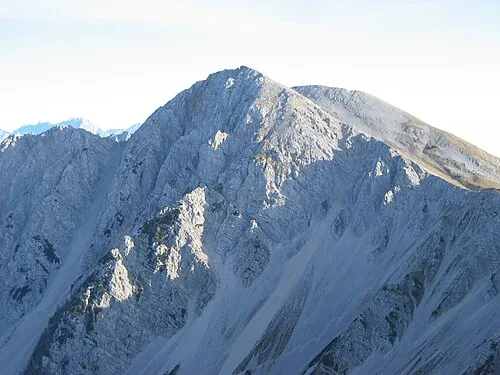
Hochstuhl No machine-readable author provided. Epirker~commonswiki assumed · CC BY-SA 2.5

Travel notes for Slovenia
From Wikivoyage
Slovenia (Slovenian: Slovenija) is a country in central Europe that lies in the eastern Alps, at the northern end of the Adriatic Sea. It is sometimes considered to be a Balkan country. Despite its small size, Slovenia has a surprising variety of terrain, ranging from the beaches of the Mediterranean to the peaks of the Julian Alps and the rolling hills of the south. Slovenia is also home to some of the finest scenery in the "New Europe". The transition from socialism to the European common market economy has gone well and serves as a model for other nations on the same track to follow.
Understand+
History:
Slavic ancestors of Slovenians came from eastern parts of Europe and inhabited territory north of present Slovenian territory in the 6th century AD. They established a state called Caranthania (Karantanija in Slovene), which was an early example of parliamentary democracy in Europe. The ruler (knez in Slovene) was elected by popular vote. The Caranthanians were later defeated by Bavarians and Franks, who subjugated them. They were Christianized, but they preserved many rituals of their pagan religion, and above all, they preserved their native language. The Slovene lands were part of the Holy Roman Empire and Austria under the Habsburg dynasty until 1918, when the Slovenes joined the Serbs and Croats in forming a new south-Slavic state ruled by Serbian Karađorđević dynasty called the Kingdom of Serbs, Croats and Slovenians ("Kraljevina Srbov, Hrvatov in Slovencev" in Slovene), renamed Yugoslavia in 1929. In WWII, Slovenia was invaded and occupied by Germans, Italians and Hungarians, leading to a parallel civil war between pro-communist liberation forces (Partizani) and axis-sponsored anti-communist reactionary factions ("Belogardisti" and Domobranci). The victory of the Allies and consequently the Partizans resulted in a violent mass exodus of those who had fought with the occupying forces, including most of the native German and Italian minorities.
After World War II, Slovenia became a republic in the reestablished Yugoslavia, which made small territorial gains from Italy. Although communist, Yugoslavia left the Soviet bloc in 1948.
Get in+
Entry requirements:
Slovenia is a member of the Schengen Agreement. See Travelling around the Schengen Area for more information on how the scheme works, what countries are members and what the requirements are for your nationality. In summary:
There are normally no immigration controls between countries that have signed and implemented the treaty; there may be such controls temporarily, such as in connection with important events and various crises.
The operators may carry out identity checks before passengers board international flights, ferries or trains, even between Schengen countries.
Citizens of the EEA countries and Switzerland do not need visas to travel in the Schengen area, and may stay up to 90 days with no requirements other than having a valid ID card or passport. See European Union#EEA citizens.
Normal visas granted by any Schengen member are valid in all countries that have signed and implemented the treaty (with exceptions for some overseas territories). The granting country may offer additional rights (such as longer stays or right to work) that apply only locally.
By bus:
The Ljubljana Bus Station (Avtobusna Postaja Ljubljana) provides composite information about international and airport bus services.
Connections between the Italian city of Trieste and nearby Koper and Piran are frequent on weekdays. There's also a daily bus between Trieste and Ljubljana. In addition, services between Gorizia (Italy) and its twin town of Nova Gorica (Slovenia) are at least hourly throughout the day although the journey is easily walkable. This offers an ideal connection between the Italian and Slovene railway networks or an alternative entry point from Trieste's Ronchi Airport or the city of Venice.
By plane:
Ljubljana Jože Pučnik Airport is Slovenia's primary international airport.
Maribor has Slovenia's second busiest airport, even if it had less than 10,000 passengers in 2016.
Source: Wikivoyage · CC BY-SA 4.0 · abridged
When to go where in Slovenia
For each month, cities with mild, fairly dry weather; the figure is that month's average high.
-
January 3°
Ljubljana
No ideal places; the closest
-
February 5°
Ljubljana
No ideal places; the closest
-
March 10°
Ljubljana
No ideal places; the closest
-
April 15°
Ljubljana
No ideal places; the closest
-
May 20°
Ljubljana
-
June 23°
Ljubljana
-
July 26°
Ljubljana
-
August 25°
Ljubljana
-
September 21°
Ljubljana
-
October 15°
Ljubljana
No ideal places; the closest
-
November 8°
Ljubljana
No ideal places; the closest
-
December 3°
Ljubljana
No ideal places; the closest
Top lists: Slovenia
Highest mountains in Slovenia
- 1Triglav 2,864 m
- 2Mangrt 2,678 m
- 3Grintavec 2,558 m
- 4Prestreljenik 2,498 m
- 5Krn 2,244 m
Largest cities in Slovenia
- 1Ljubljana 272.2K
- 2Maribor 96.2K
- 3Celje 38.1K
- 4Kranj 38K
- 5Koper 25.8K
Nature and heritage in Slovenia
Largest cities and towns
-
Celje City, Urban Municipality of Celje38.1K
-
Koper City, Urban Municipality of Koper25.8K
-
Ljubljana City, Ljubljana272.2K
-
Maribor City, Urban Municipality of Maribor96.2K
-
Jesenice City, Municipality of Jesenice13.3K
-
Domžale City, Municipality of Domžale13.2K
-
Kranj City, Urban Municipality of Kranj38K
-
Škofja Loka City, Municipality of Škofja Loka11.6K
Other places across Slovenia
77 placesMountains & nature3
- Snežnik · Mountain
- Triglav National Park · Natural site
- Žumberačka Gora · Mountain
Lakes, rivers & coasts14
- Rinža · River
- Rižana · River
- Sava Bohinjka · River
- Sava Dolinka · River
- Savinja · River
- Ščavnica · River
- Selščica · River
- Sora · River
- Stična · River
- Šujica · River
- Temenica · River
- Tržiška Bistrica · River
- Velika Božna · River
- Voglajna · River
Places bordering Slovenia
Public holidays in Slovenia (2026)
- 1 January, ThursdayNew Year's Day
- 2 January, FridayNew Year's Day
- 8 February, SundayPrešeren's Day, the Slovenian Cultural Holiday
- 5 April, SundayEaster Sunday
- 6 April, MondayEaster Monday
- 27 April, MondayDay of Uprising Against Occupation
- 1 May, FridayLabor Day
- 2 May, SaturdayLabor Day
- 24 May, SundayPentecost
- 25 June, ThursdayStatehood Day
- 15 August, SaturdayAssumption Day
- 31 October, SaturdayReformation Day
- 1 November, SundayDay of Remembrance for the Dead
- 25 December, FridayChristmas Day
- 26 December, SaturdayIndependence and Unity Day
Nationwide public holidays; regional holidays are not included. Dates of religious holidays may shift by a day. Source: python-holidays.
Sources & licences
Data last updated: · 2 independent sources